
Hull Geological Society
The
Building Bricks of Hornsea
From
the Ron Harrison Collection
[in
Hornsea Museum]
Compiled and written by Stuart Jones FGS
Hull
Geological Society
Printed and Published by RS Jones FGS
Berkeley Street, Hull, East Riding of Yorkshire.
First
Published 2017
[Re-edited and re-published by Mike Horne FGS, Hull Geological Society in 2026]
Introduction.
Think of Geology, and
building bricks do not immediately spring to mind.
However, they are an
important part of our civilisation and one step forward from using stone from
nearby quarries (if suitable) and also the means to manufacture them is more
ready to hand.
Over the last 20
years, or so, the study of local bricks and their places of origin has been made
by Mr Ron Harrison, who is a long standing member of the Hull Geological
Society. During this time he has amassed a large and comprehensive collection of
bricks as used in the town of Hornsea and the surrounding areas of the East
Riding of Yorkshire.
The pages that follow will give some
insight into this interesting subject, and the illustrations and accompanying
descriptions of places of manufacture over decades, will recall the fact that at
one time in the mid 19th-20th centuries, many coal mines
were associated with brick-making. This is due to the fact that in some areas,
particularly in the West Riding of Yorkshire, the coal deposits were under or
overlain by seams of clay, which was suitable for the purpose of brick-making.
Transporting the bricks to a wider area was made possible by the development of
both railways and canals.
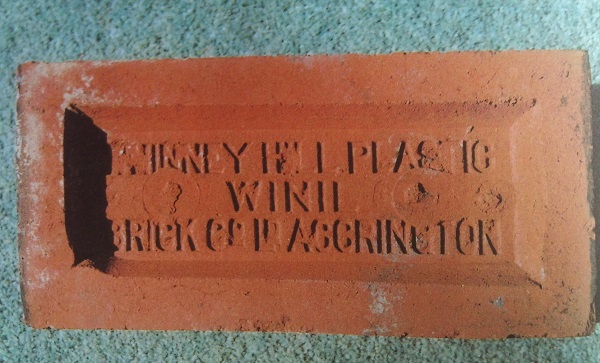
Winney
Hill Plastic (T M Winil) Brick Co., Acrington.
Good quality facing brick, very heavy and dense with a
smooth face. Used since early 20th century and stands up well to sea
air with no loss of face or pitting. Found: Hornsea Promenade, Bridlington Sea
front south and Trafalgar Crescent.
Size:
length 9”, height 3 1/8”, width 4 3/8”.
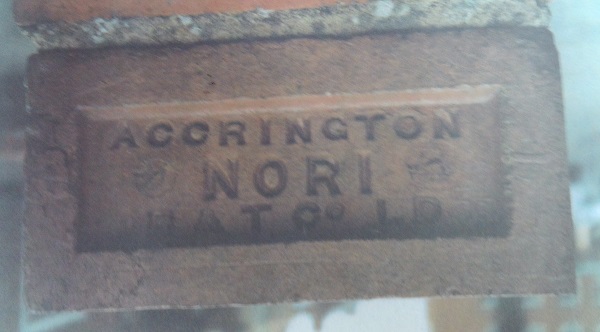
A very
similar brick to the preceding one, but darker in colour due to the make-up of
the clay and firing process. Found around Hornsea on some older properties and
the Wellington Road area of Bridlington.
Size:
length 9”, height 3”, width 4”.
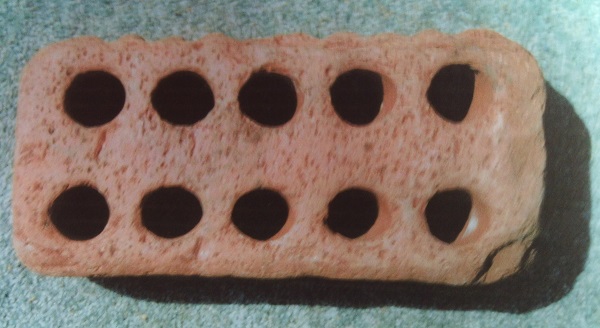
Ten
hole class “B” engineering brick
A fairly common modern brick (late 20th
Century), example of a non-facing bick used extensively throughout Hornsea in
garden walls and interior work.
Specimen found on North Beach, Hornsea in 1997.
Size:
length 8 ½”, height 2 5/8”, width 4”.
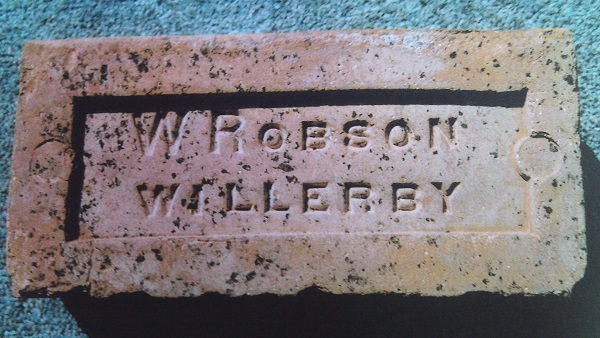
W
Robson and Co., Willerby, near Hull.
A good
quality facing brick with a shallow frog, medium weight and light red in colour.
Size:
length 9”, height 3”, width 4 ¼”.
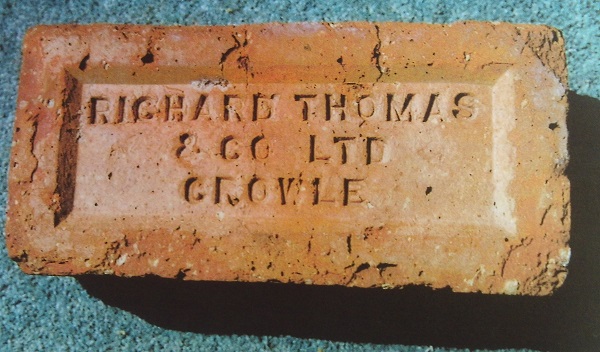
Richard Thomas & Co Ltd, Crowle.
A
general purpose common brick with a shallow frog. Used in front wall of a house
on Atwick Road, Hornsea and Beverley High Road, Hull.
Size:
length 9”, height 3”, width 4 ¾”.
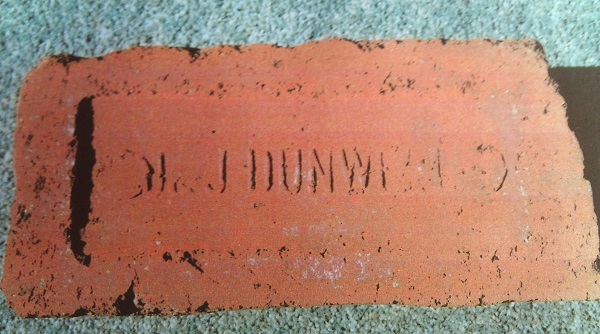
J & J
Dunwell.
Full
size facing brick, medium weight with a shallow frog.
Original side wall: Dean Court, Hornsea and retaining wall, basement of Red
House, Flamborough Road, Bridlington.
Size:
length 9 1/82, height 3 1/16”, width 4 ¼”.
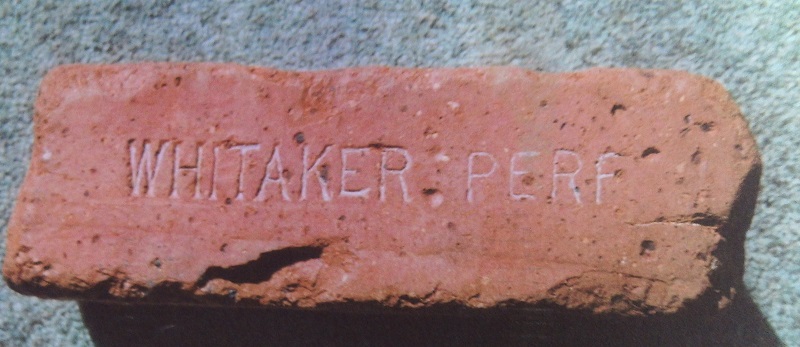
Whitaker Perf
A
medium class 2 semi-engineering brick.
Perforated with 3 holes used in sea defences and ARP observation posts, South
Beach Hornsea.
Size:
length 8 3/8”, height 2 ¾”, width 3 7/8”.
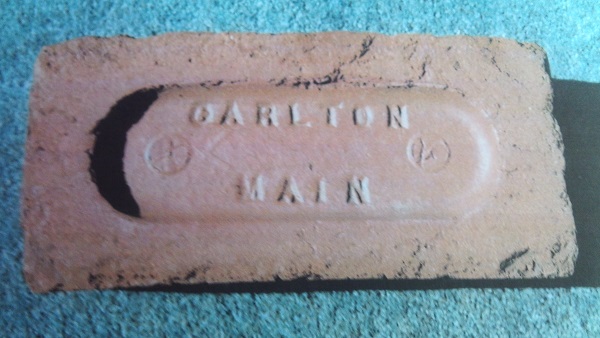
Named
after Carlton Main Colliery.
A hard
facing brick of good quality, with a shallow frog.
Used
extensively around the East Riding, including Hornsea and Hull.
Size:
length 8 ¼”, height 3”, width 4 ¾”.
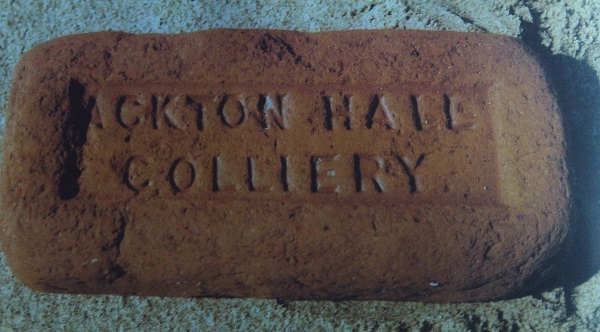
Named
from Acton Hall Colliery.
A red
facing brick used as part of the post-war sea defences, found on Hornsea beach.
Size:
length 8 ¾”, height 3 ½”, width 4 1/8”.
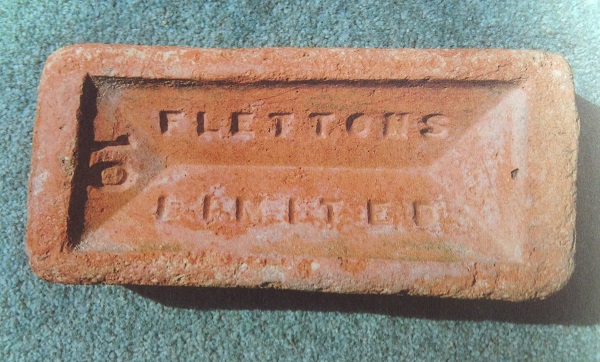
Flettons Ltd
Common
brick for interior work.
North
seafront, Hornsea
Size:
length 8 7/8”, height 3”, width 4”.
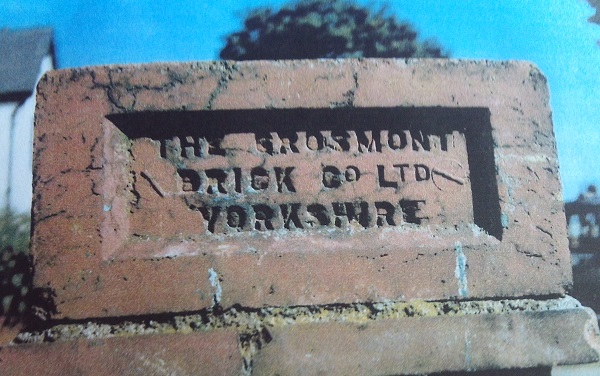
The
Grosmont Brick Co Ltd, Yorkshire.
A good
facing brick medium red with inset frog.
Hornsea and Bridlington.
Size 8
7/8”, height 3”, width 4”.
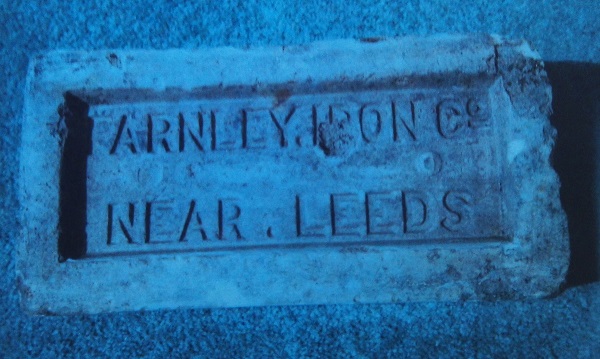
Farnley Iron Co Ltd, Farnley, near Leeds.
A
facing brick with white glazed finishes on faces. Used in the public toilets,
Atwick Road, Hornsea.
Size :
9 1/8”, height 3 1/8”, width 4”.
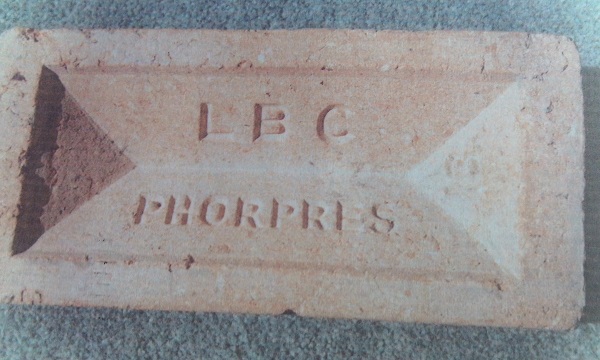
LBC
Phorpres. The London Brick Co Ltd.
A
modern common brick, lightweight with a deep frog.
Size:
length 5 5/8”, height 2 ½“, width 4”.
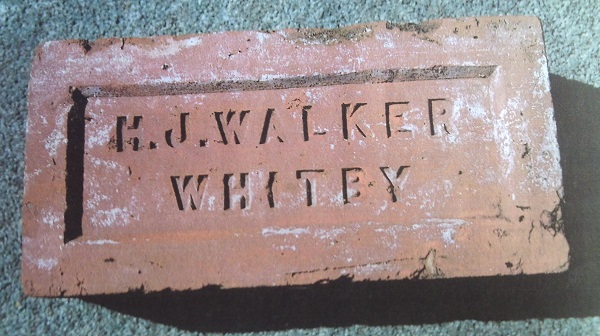
H J
Walker, Whitby.
Mid-red facing brick, medium weight with a shallow frog.
Size:
length 9”, height 4 ½”, width 3”.
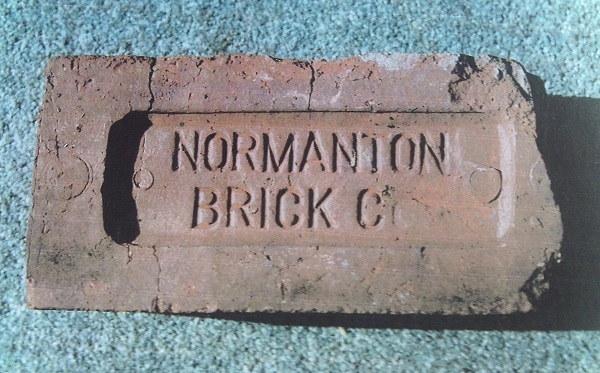
Normanton Brick Co
Red
facing brick.
Used
in Newbiggin, Hornsea and Lockwood Street in Driffield.
Size:
length 8 ¾”, height 2 7/8”, width 4”.
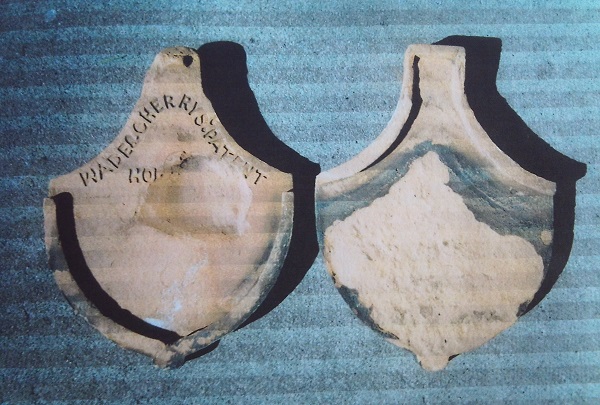
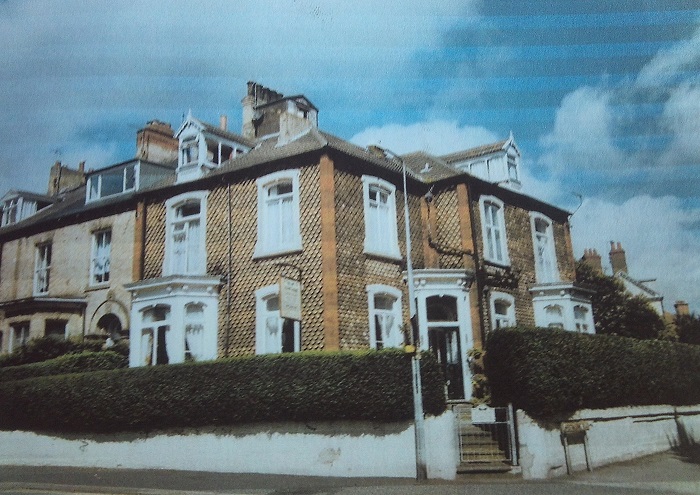
Wade
and Cherry’s patent acorn tile
Used
on 31 New Road, Hornsea.
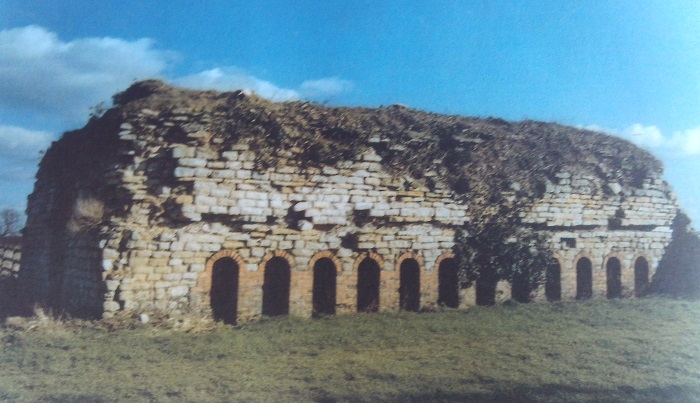
Scotch
type brick kiln.
Late 19th Century.
Brick
Yard Farm, Slingsby.
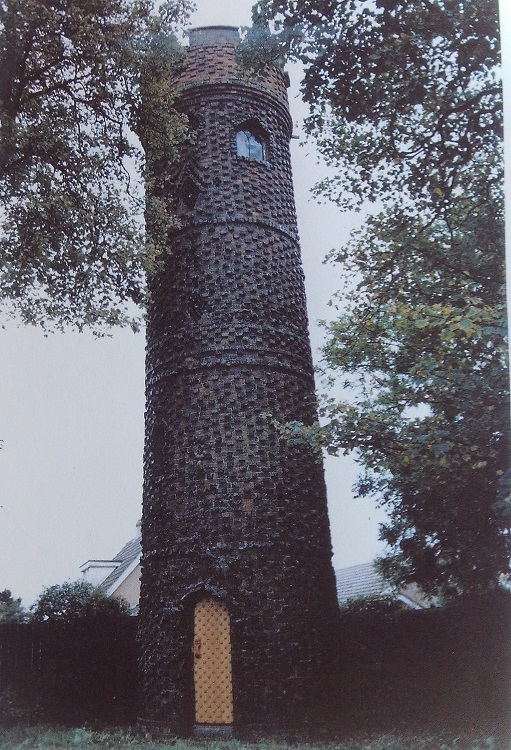
Bettison’s Folly in Hornsea.
The tower was built
in the grounds of Newbigin House in 1844 by a newspaper proprietor and brewer,
William Bettison. Like many Victorian follies, it was faced with durable
“treacle-fired” bricks to give it a rustic look. It also incorporates an unusual
winch operated flagpole.
Bettison was an
exacting employer of predictable habits. He liked to dine immediately he arrived
home, and it is said that a servant could ascend the tower to warn the kitchen
staff of the approach of his barouche over Southorpe Hill.
During the 19th Century,
the threat of invasion was an ever present reality. From the tower, a sea view
of at least 20 miles would afford ample warning of an invading force. Certainly
the tower served as a look-out point and siren during WW2.
The tower is a grade
2 listed building.
[Editor's note - the images are digital photographs of the original 2017 printed publication.]
Registered Educational Charity No. 229147